
Photography
DIGGERS ON THE KLONDIKE (working title)
Year: 2029
Classification: G
Runtime: 80 min
Produced In: Australia
Directed By: Andrew Pike
Produced By: Andrew Pike
Language: English
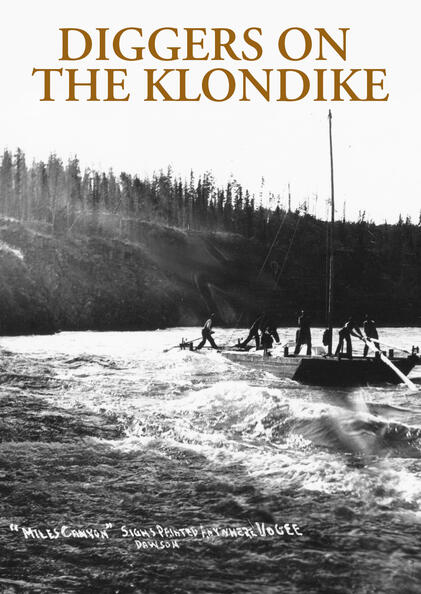
A NEW DOCUMENTARY, NOW IN DEVELOPMENT, DUE FOR PRODUCTION IN 2028-9, AND RELEASE IN 2030
The experiences of "the motley throng" of Australians and New Zealanders, who went across the Pacific with "upturned sleeves and a swagger", to the last great gold rush of modern times - to the Klondike goldfields in the far north-west of Canada in the late 1890s.
DIGGERS ON THE KLONDIKE will be co-porduced and written by Andrew Pike based on original research and journal articles by the late Dr Robin McLachlan using Australian, New Zealand and Canadian archives.
Outline
The Klondike Gold Rush (1897-1899) in Canada's remote northwest was the last great gold rush of modern times. Over a thousand Australians and New Zealanders set out on the epic journey to the goldfields in the Yukon Territory, across frozen mountain passes and through deadly river rapids.
The film draws on a decade of original research by the late Dr Robin McLachlan who identified over 700 individuals, men and women from Australia and New Zealand, who successfully reached the Klondike. DIGGERS ON THE KLONDIKE explores their experiences, both individual and collective. The "motley throng" of Australians and New Zealanders was noted for their casual confidence - what one contemporary observer called their "upturned sleeves and a swagger".
While there is a vast literature on the Klondike, it is America-centred and in the case of cinema more Hollywood than history. While Charlie Chaplin, Mae West, John Wayne, and even Bob Hope and Bing Crosby reached the Klondike in the movies, Australians and New Zealanders are rarely mentioned in any text, whether fact or fiction. However, Dr McLachlan's research reveals that Australian and New Zealanders, men and women, have unique stories that deserve being researched, re-told and "repatriated". Only a handful found found their fortune in gold. To have reached the Klondike, though, to have been a "Stampeder", was a badge of honour.
What the film will achieve
The Australian and New Zealand role in the Yukon had significance both to Canada and to the prospectors. Drawing on goldfield experiences in Australia unmatched by any other nation in the Klondike, this involvement included gold mining practicalities as well as resisting official corruption, often to the displeasure of the authoritarian North West Mounted Police. The Klondike saw Australians and New Zealanders as global leaders in both mining and in grassroots democracy.
Australians and New Zealanders were at the forefront in servicing the needs of an isolated goldfield – merchants, doctors, hotelkeepers, as well as workers in "Paradise Alley". One enterprising woman went from selling silk lingerie to hotel-keeping and mine ownership, Australian men made their name as boxers, and a woman gained fame as a music hall star.
In expanding our sense of national identity, we need to understand the ways, beyond foreign battlefields, in which we experienced the world and made an impact on it. Our goal is to expand the commonly accepted conventions of Australian history focussing on war and commercial ventures. Australian ingenuity, practical wisdom and survival skills in the extreme conditions of the Klondike should be matters of national pride and celebration, as these skills are in battles at Gallipoli, on the Western Front or in the Pacific. The large number of Australians involved in the Klondike means a significant population of descendants, and we want to stimulate more research at a grass roots' level, with more stories being told in literature, film and other art forms.
We will accompany the film with a study guide for schools, aimed at encouraging local and family historical research. We will also work to encourage museums to tackle the Klondike story to bring this neglected part of our cultural heritage to life. History conferences nationally and internationally will also be a key part of our strategy, and we see these as being the equivalent of film festivals for other documentaries.
The rich archive of folk music specifically from the Klondike (albeit not necessarily Australian in origin) will be thoroughly researched and used to enrich our telling of Klondike stories.
But most importantly, our story takes place in the early decades of photography, and several Canadian archives have rich collections of original high quality photographs taken before and during the gold rush and documenting the extraordinary lives of the Stampeders.
Permalink: https://www.roninfilms.com.au/feature/16478